Custom Web in 2026: Nuxt 4 vs. PHP vs. WordPress
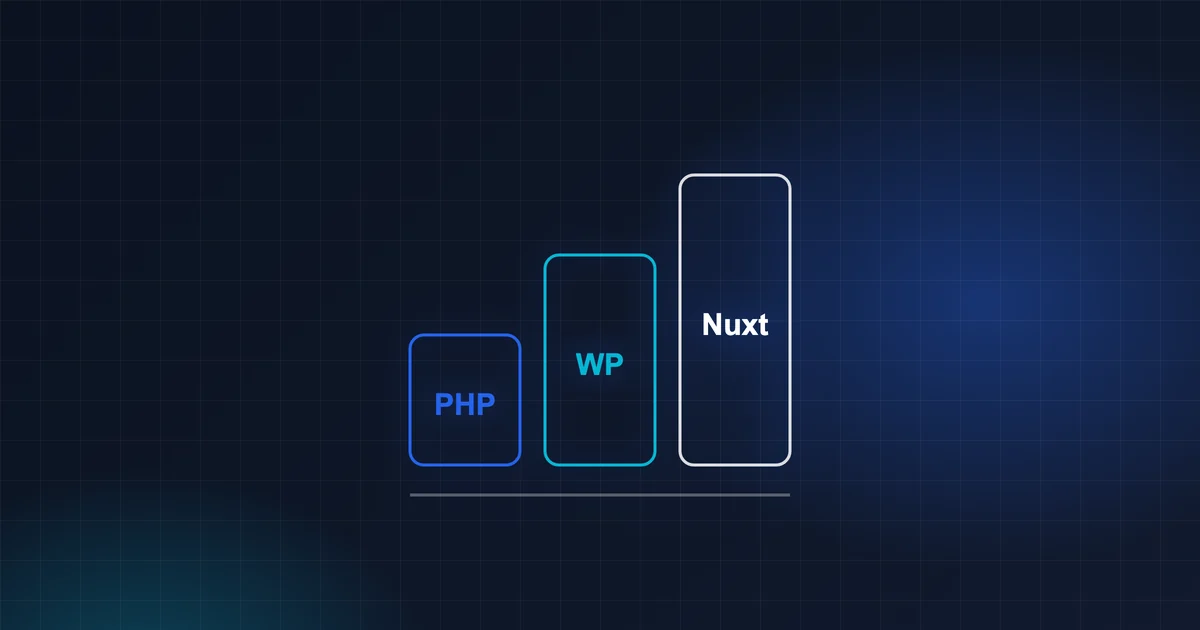
A comparison of traditional PHP, WordPress, and the modern Nuxt 4 (Vue) stack. Find out which technology is best for your new website, e-shop, or application.

When designing digital architecture, I often get the same question from clients: “What will you actually build my website in?” There are endless options on the market today. Many people think that creating a website simply means downloading a template and rewriting the texts. The reality, however, is that choosing the wrong technology at the beginning can cost you a lot of money a year from now in repairs, slow loading times, or security vulnerabilities.
As a digital architect, I look at every project through the lens of long-term sustainability. Today, we will look together at the three most common approaches to web development, their pros and cons, and why it is good to leave the decision to an expert.
1. Traditional Classic: Pure PHP, HTML, CSS, and JS
A time-tested approach. Everything is written from scratch. The back-end runs on PHP, the front-end consists of classic HTML, and the visuals are styled with CSS.
- Pros: It runs everywhere. You can deploy the code to the cheapest hosting for a few euros a month. The system is extremely stable and, if well-written, requires almost zero maintenance.
- Cons: Development this way is slower and more expensive today. If we want to create a dynamic experience where things on the screen change without reloading the entire page, doing it with pure JavaScript is tedious and the code quickly becomes messy.
- Suitable for: Specific, custom-built backend systems where logic stability is more important than a modern user interface.
2. WordPress: The King of Content and Administration
WordPress powers over 40% of the entire internet today. It is a robust content management system that gives clients enormous freedom.
- Pros: An extremely fast start. After hand-off, the client can easily edit texts, add articles, or manage products (via WooCommerce) on their own in a very user-friendly environment. It is the ideal choice for blogs and content-heavy sites.
- Cons: The tax for versatility is performance and security. If a WordPress "frankenstein" is built on dozens of third-party plugins, the website will be slow. It requires regular maintenance, core, and plugin updates; otherwise, it becomes an easy target for attacks.
- Suitable for: Clients who require complete control over content without having to touch the code. With a professional setup and custom theme development (without unnecessary page-builders), it remains a top-tier tool.
3. Modern Standard: Vue 3, Nuxt 4, and Vercel
This is the category I operate in when developing premium applications (and what this website runs on as well). The architecture is decoupled—we use Vue.js for interactive design and Nuxt 4 as a framework that optimizes and renders everything on the server side (SSR). Deployment is often handled via cloud services like Vercel.
- Pros: Speed that is hard to achieve with regular PHP or WordPress. The website behaves like a native mobile app—transitions between subpages are instant. Nuxt 4 brings flawless technical SEO, clean code, and maximum security, as the database and sensitive data are strictly separated from the user interface.
- Cons: Complexity of deployment. It requires deep knowledge of modern development and modern infrastructure. It is not something an average user can manage and edit without technical skills.
- Suitable for: Medium to large projects, custom web applications (e.g., attendance or management systems), modern e-commerce solutions, and websites where speed, security, and a "wow" effect are crucial.
Direct Comparison for Your Business
If we were to summarize it from a business perspective:
- Development Cost: WordPress is often the most affordable upfront (if we leverage its pre-built parts). Pure PHP and Nuxt require more hours of custom programming.
- Management and Stability: WordPress requires your regular attention (or a monthly maintenance plan). A well-designed Nuxt application on the cloud runs stably and securely without the need for constant core security updates.
- Performance: The modern Nuxt stack wins here. Loading time is a fraction of a second, which drastically reduces the bounce rate of your customers.
Why Not Leave Development to Chance?
Maybe you are considering clicking a website together yourself using an available site builder. For a personal blog, that's enough. However, as soon as your website represents your company, carries responsibility for sales, a booking system, or internal business processes, an amateur solution will soon collapse under the weight of requirements.
You don't just need a programmer; you need a digital architect. Whether I design a blazing-fast Nuxt 4 application for you, a stable e-shop, or program a clean and secure custom WordPress that you can easily manage yourself—I always choose technology that serves your business, not the other way around.
Have a project you want to discuss? Contact me and let's find out what is technically possible for you.
- #WordPress
- #Nuxt
- #PHP
- #Cloudflare
- #web na mieru